Intent changes by context
People browsed for inspiration before actively comparing suppliers.
CASE STUDY / ONE FAB DAY
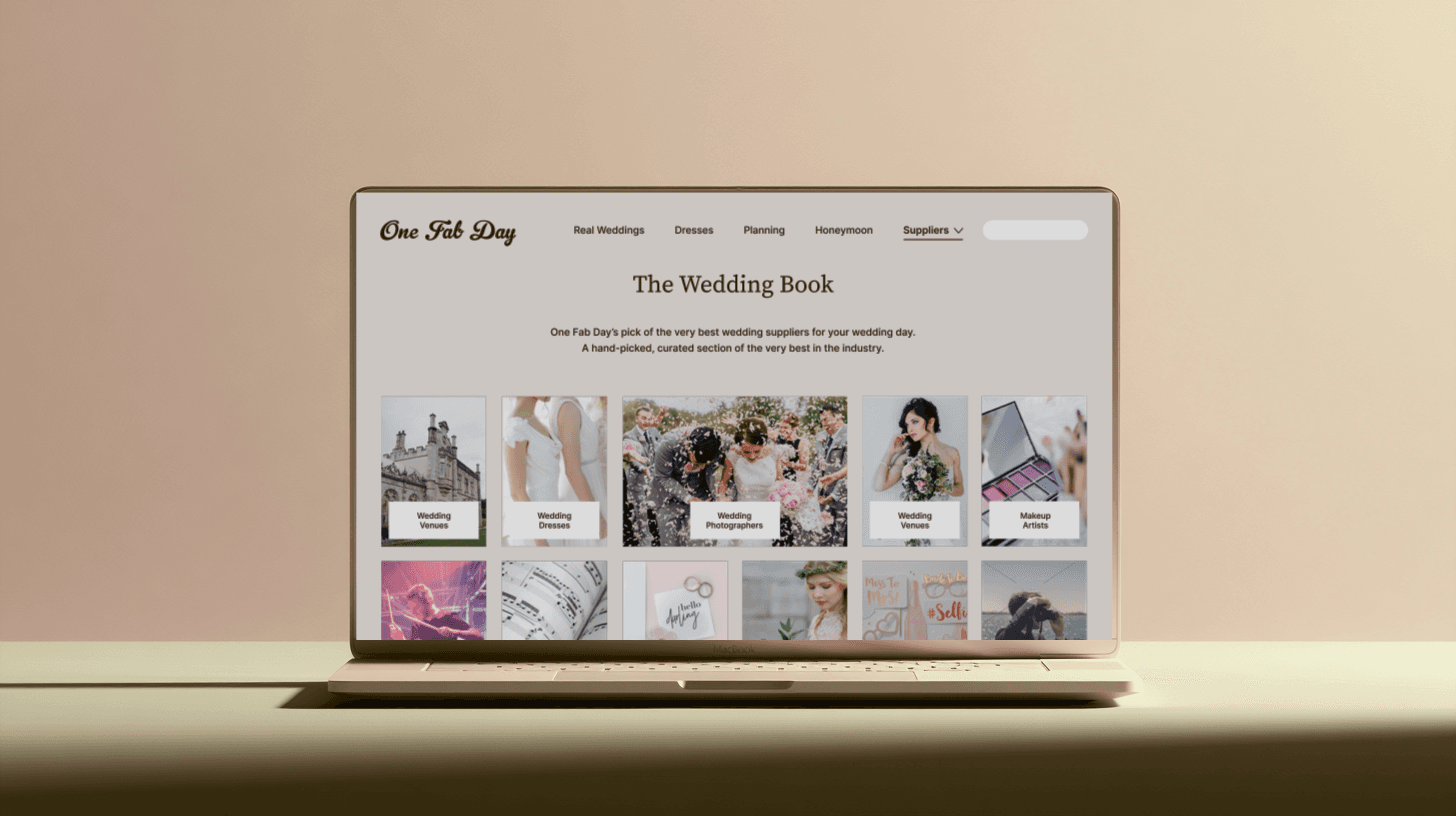
One Fab Day combined high-traffic editorial content with a curated supplier platform. I led product and UX decisions that strengthened supplier value and improved workflows to maintain quality at scale.
3x
Supplier outbound clicks
> 85%
Partner renewals year-on-year
~50%
Faster approval cycle
One Fab Day combined high-traffic wedding editorial with a curated, invite-only supplier directory. Editorial content built audience trust, search visibility and repeat engagement. The supplier directory was the core commercial product.
The challenge was to connect these two parts of the platform more clearly, without weakening the editorial trust that made the brand valuable.
The opportunity was to connect inspiration and supplier discovery, while protecting the editorial trust that made One Fab Day valuable.
This was an evolving product. Decisions were shaped by data, supplier conversations, editorial knowledge and operational bottlenecks.
People browsed for inspiration before actively comparing suppliers.
Imagery and editorial context strongly influenced supplier confidence.
Suppliers needed clear evidence that the platform was driving meaningful traffic.
DECISION 01
The supplier directory was commercially important, but it risked feeling like a generic listings page. I repositioned it as The Wedding Book, a curated destination with a clearer place in the overall site.
Why it mattered
The recommendations needed to feel as trusted and selective as the editorial content around them.
DECISION 02
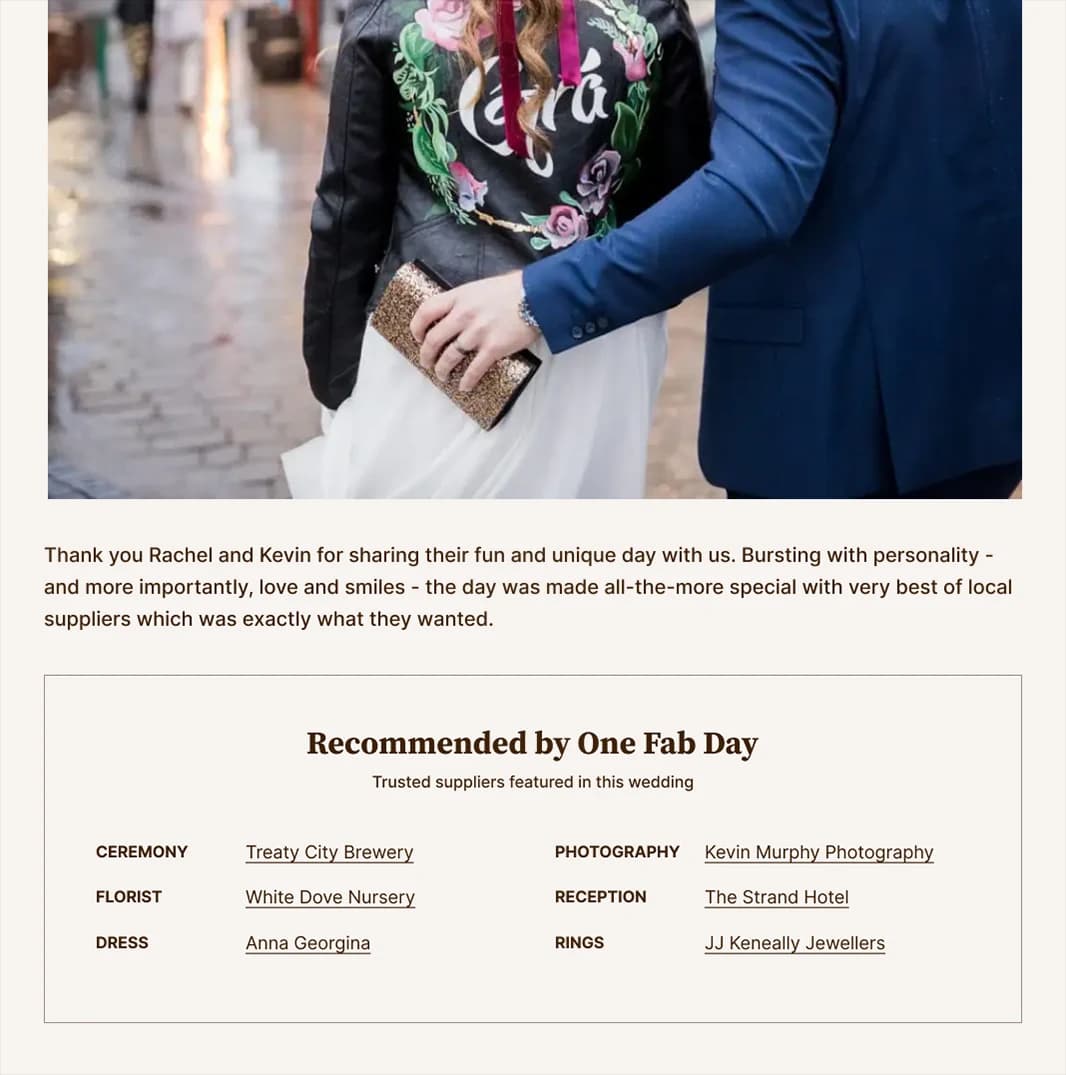
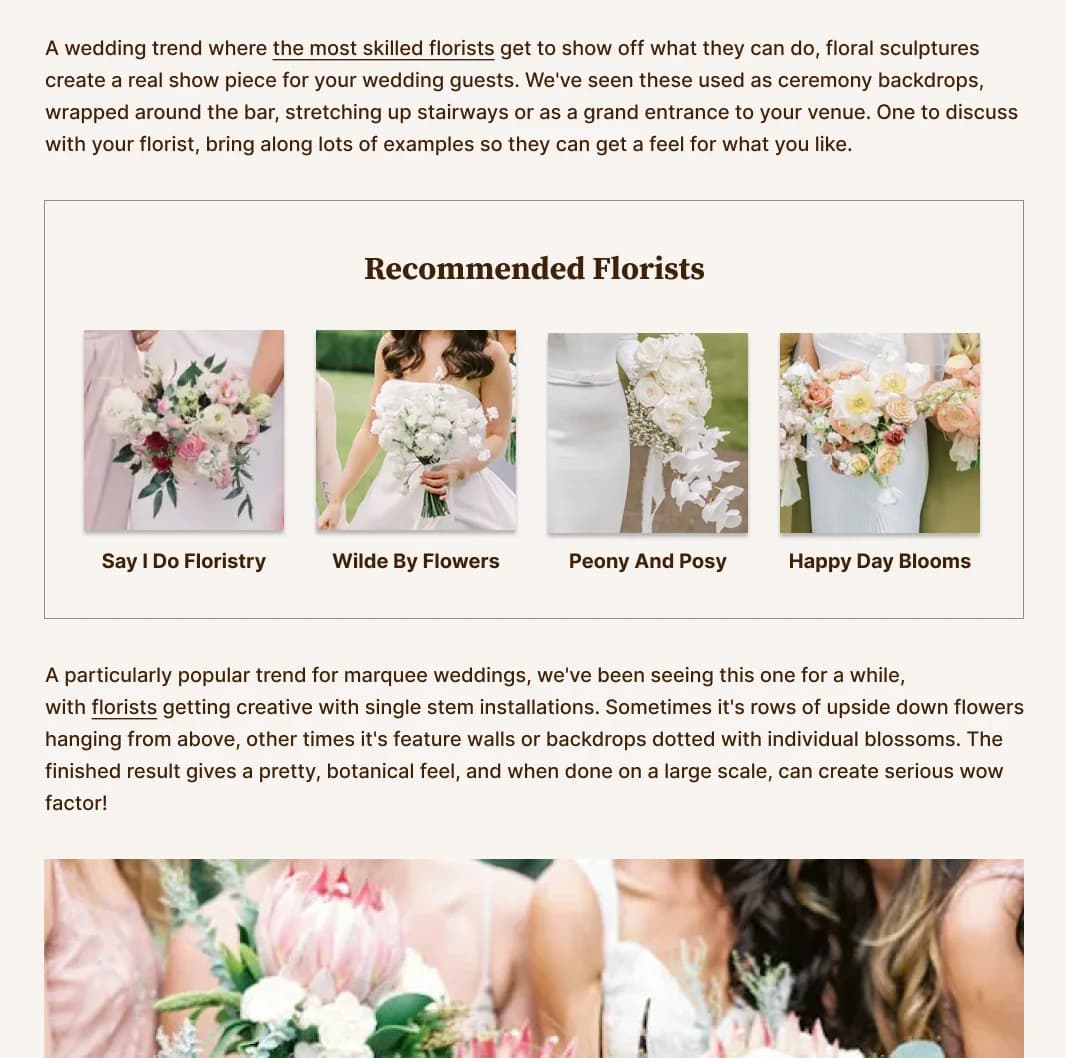
Users often formed preferences while browsing real weddings and inspiration, rather than by visiting the directory directly. I added relevant supplier pathways within editorial content, so discovery could happen at the point where interest was developing.
Why it mattered
Supplier discovery worked better when it followed naturally from content users already trusted.
DECISION 03
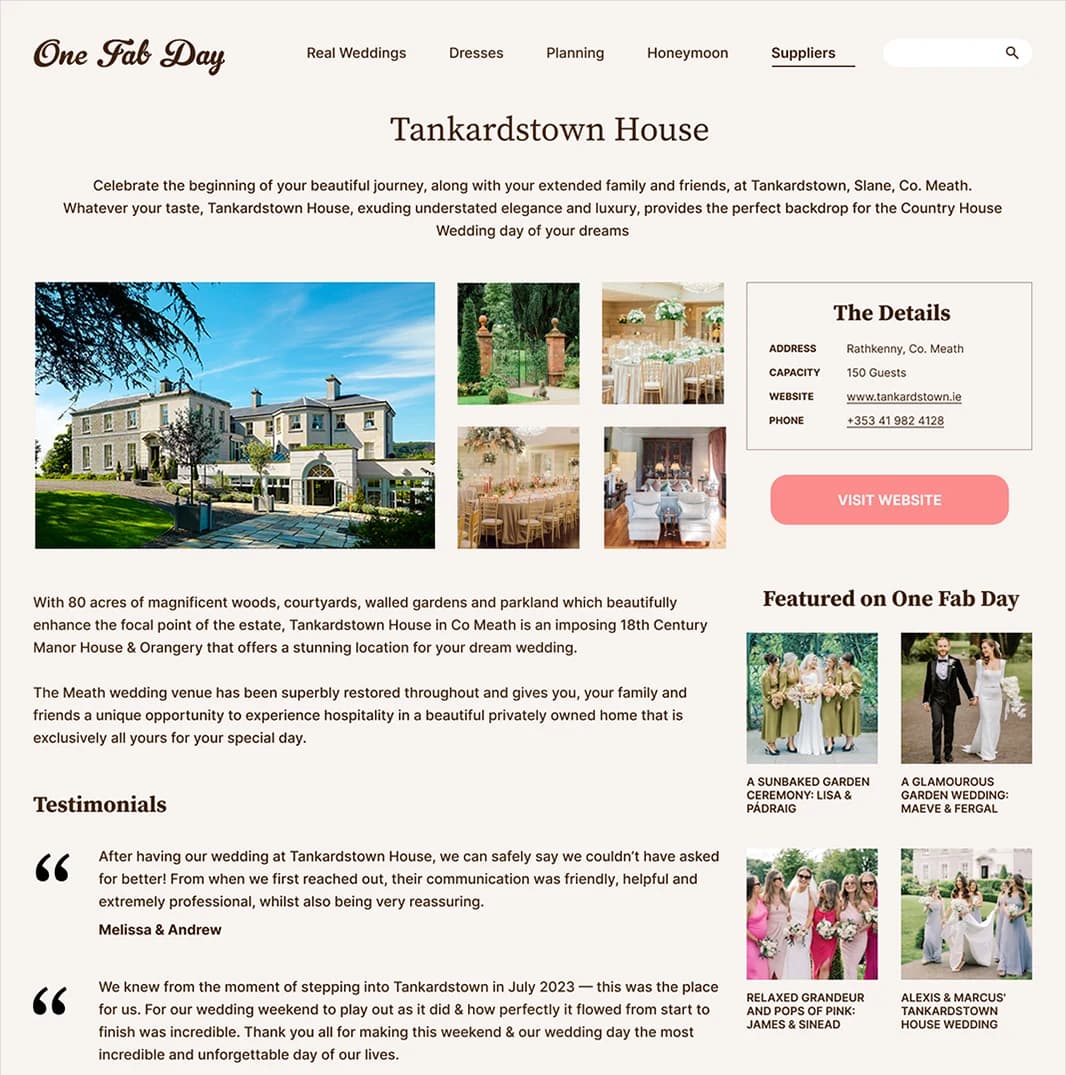
I moved the experience away from text-heavy listings towards image-led category pages, consistent supplier cards and clearer profiles. I also made Visit Website the main action, giving users a more direct next step.
Why it mattered
Users could scan and compare suppliers more easily, while partners received clearer and more measurable traffic.
DECISION 04
Maintaining a curated product depended on more than the customer-facing interface. I clarified content requirements, approval stages and team handoffs for supplier profiles, editorial links, sponsored content and renewals.
Why it mattered
Better internal workflows made it faster to maintain quality and keep commercial content accurate.
The work showed how editorial trust, product design and commercial value could reinforce each other. By improving both the customer experience and the systems behind it, we created clearer supplier value without weakening the editorial experience that made the platform successful.