For users
A clearer way to search, compare and shortlist names.
CASE STUDY / ROLLERCOASTER.IE
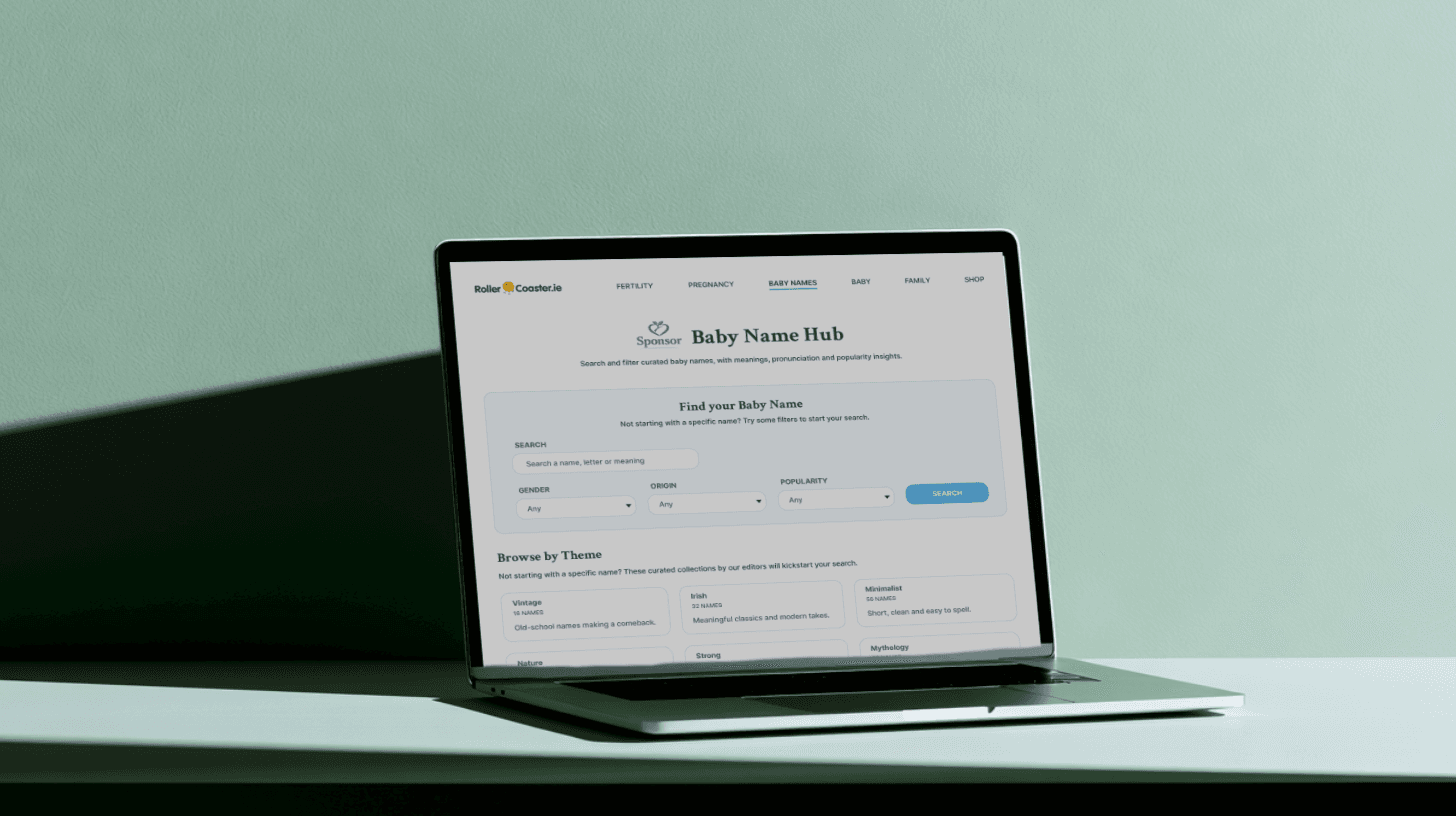
I turned a large content archive into a more useful product for browsing, filtering and comparing names, while creating a clearer sponsor-ready surface for a valuable early-parenting audience.

Award-winning wider redesign
Rollercoaster.ie was named Media Brand of the Year following the wider rebrand and redesign
Baby-name content was already one of Rollercoaster.ie's strongest evergreen topics, attracting search traffic, social engagement and repeat interest.
The opportunity was to turn that demand into a structured discovery experience that supported browsing, filtering and shortlisting, while creating stronger connections between editorial content and commercial opportunities.
The audience already existed. The opportunity was to build the product around it.
A clearer way to search, compare and shortlist names.
A structured destination linking high-performing content to useful name pages.
More repeat browsing, deeper sessions and clearer sponsorship potential.
DECISION 01
The existing baby-name content was written as free text, so it could not reliably support search, filtering or consistent name pages. I defined a structured Name content type that fitted the existing WordPress workflow, including fields for meaning, origin, pronunciation, gender, themes and related editorial.
Why it mattered
A clear content model made the concept searchable, maintainable and able to grow without redesigning the system each time.
DECISION 02
Some users would arrive with clear criteria, while others would want to browse for ideas. I designed the experience around direct search, practical filters and scannable result cards, with individual name pages providing deeper information and related content.
Why it mattered
The product needed to help people narrow a shortlist quickly without losing the open-ended exploration that makes choosing names enjoyable.
DECISION 03
Existing articles already attracted users through search and social channels. I designed links between articles, themed collections and individual name pages so people could move naturally from inspiration into structured browsing and back into relevant editorial.
Why it mattered
Connecting the two experiences reduced dead ends and gave high-performing editorial content a more useful destination.
DECISION 04
Baby naming is a high-interest moment within the wider pregnancy journey. The concept created a coherent destination where relevant partners could appear across search, results and name pages, rather than relying on sponsorship across disconnected articles.
Why it mattered
Commercial placements could support the product without interrupting the task users had come to complete.
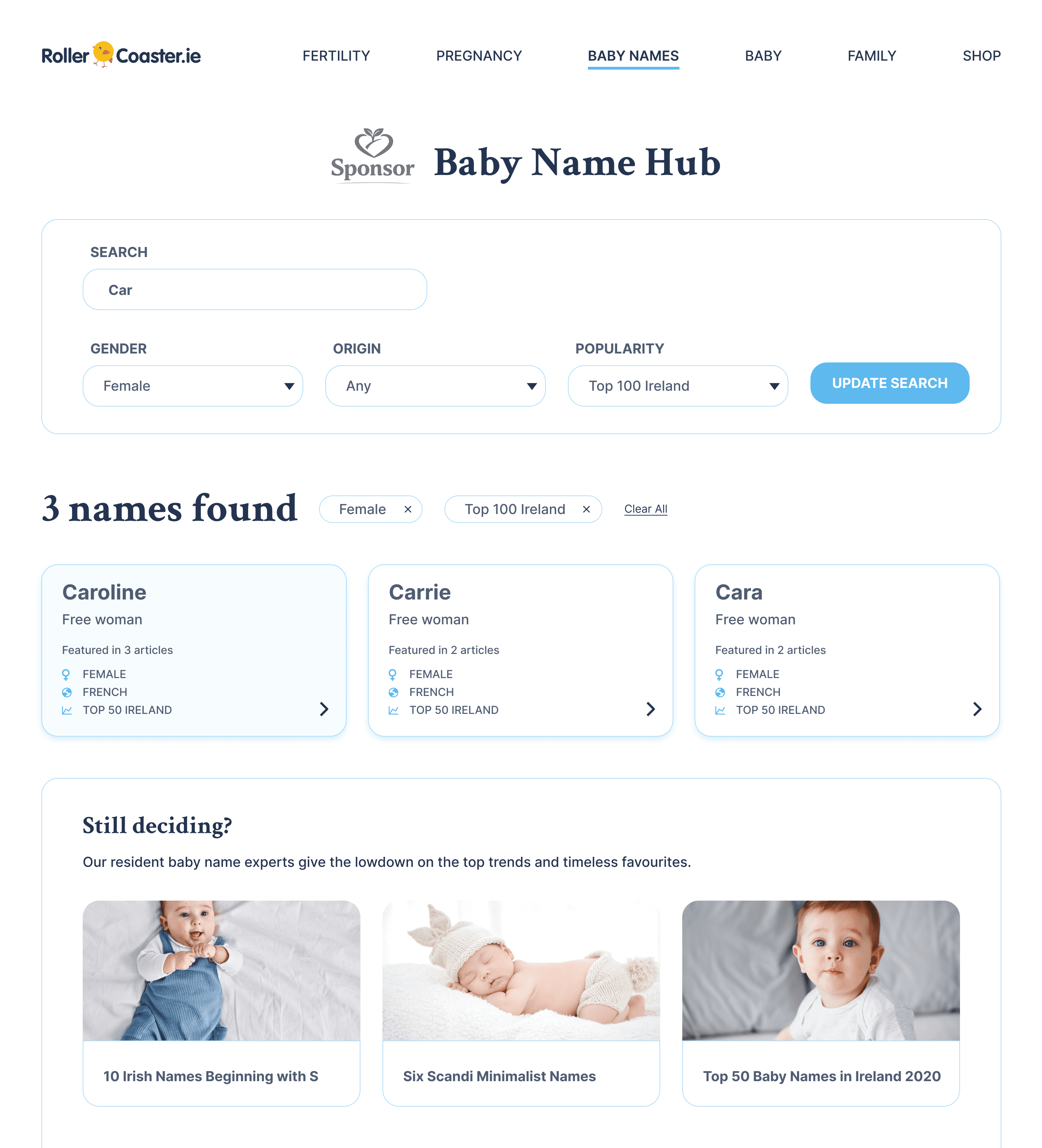
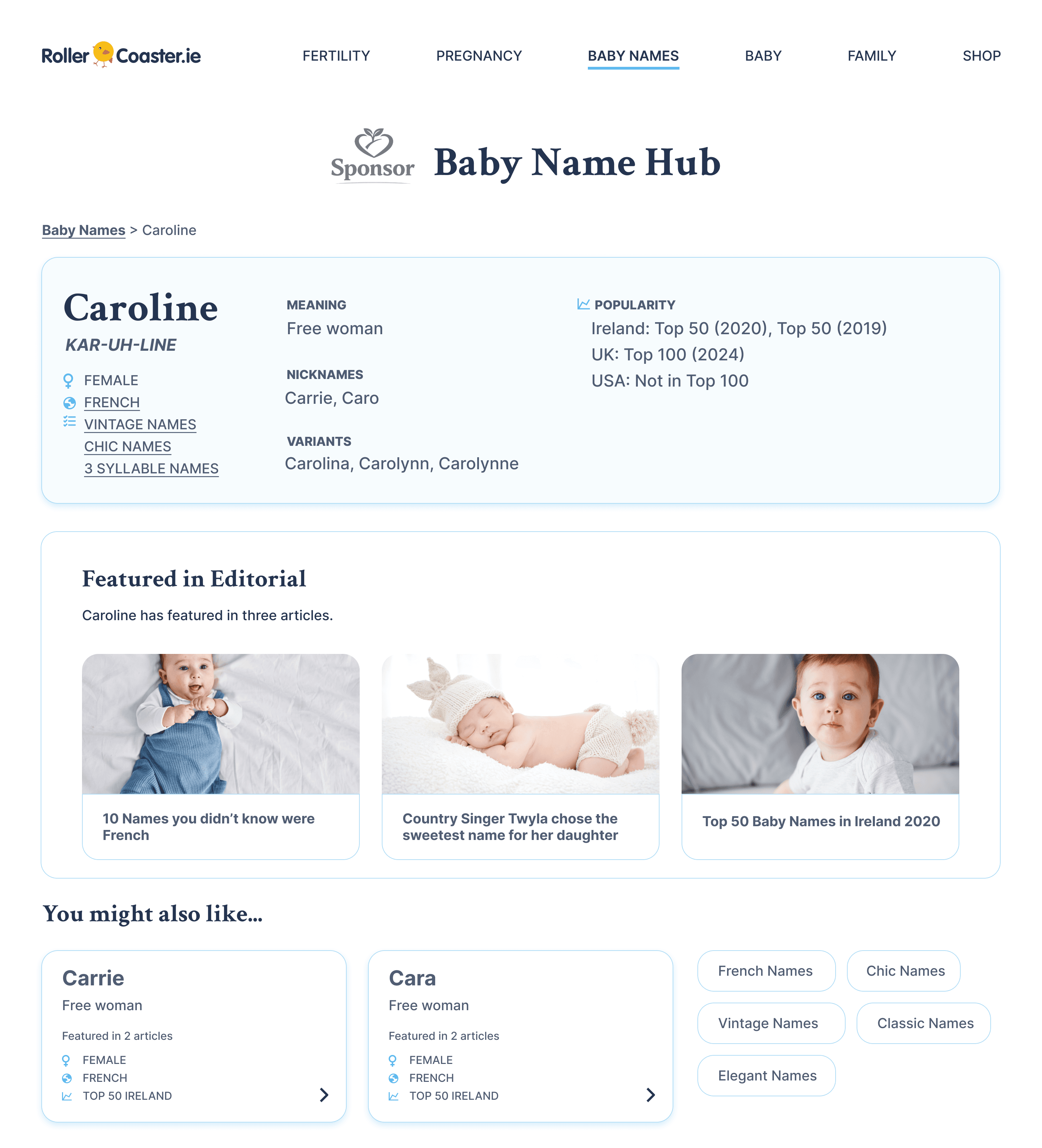
The concept turned proven content demand into a structured product model for search, filtering and discovery. It connected user needs with a maintainable CMS structure, stronger editorial pathways and a clearer commercial opportunity.
This case study focuses on product and UX strategy/design work completed before handover. Screens are representative recreations used to illustrate the thinking and proposed experience.